
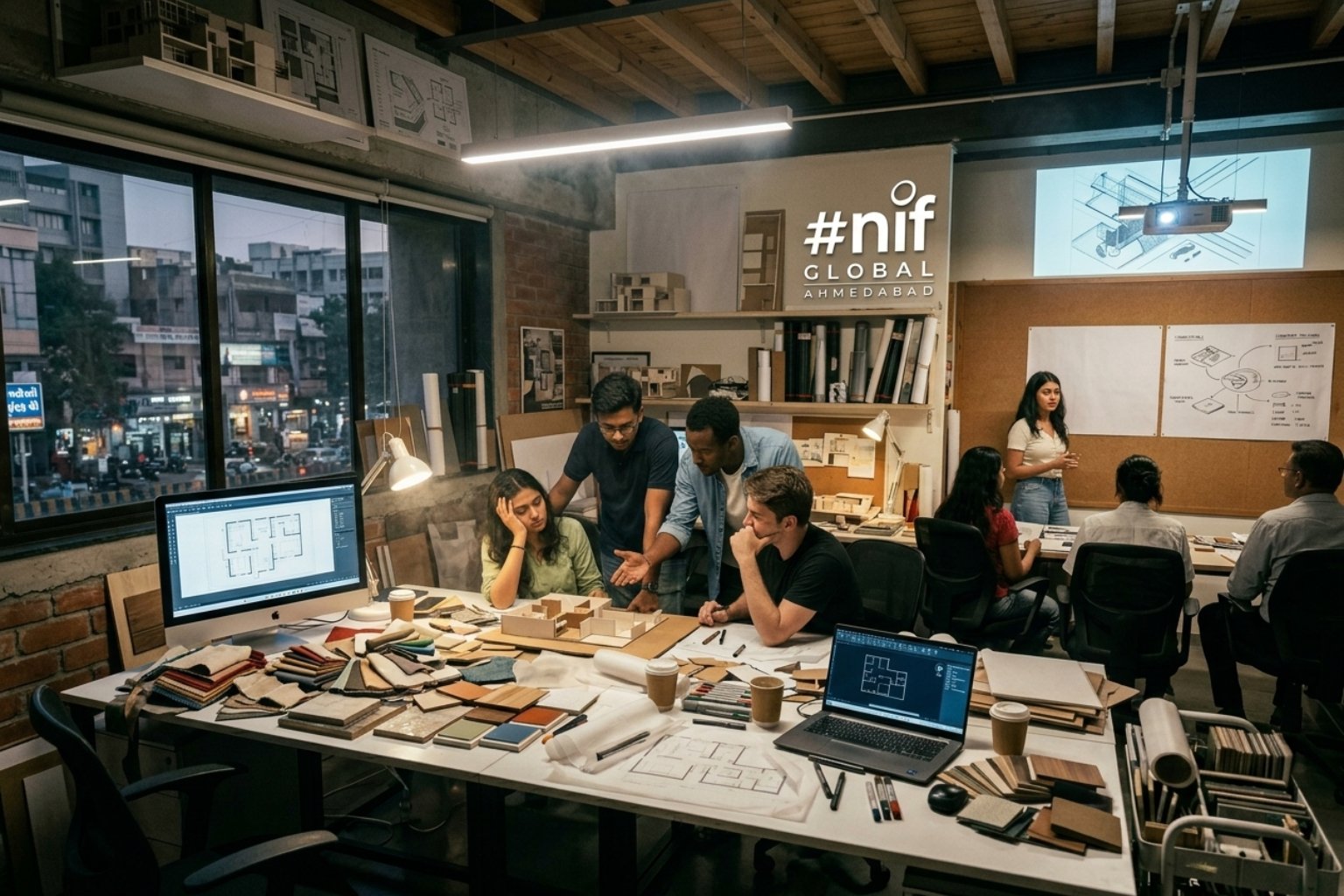
If you have ever looked at the perfectly styled rooms online, you will recognize the warm lighting, the perfect clean layouts and the perfect feeling. All the things seem creative and thrilling from the outside. However, when you enter an interior design class, you will discover much more going on behind the scenes of those images.
Interior design isn’t merely decorating a space. It’s all about knowing how a space works, how people use it, and how the design decisions can impact people’s lives. This is what you will start to feel within an interior design institute.
It Starts With Observation, Not Just Classes
Lectures are not the only things that make up a typical day. You begin to notice spaces and how they are organized, the different light levels and how they make spaces feel more or less comfortable, as a student at an interior design institute.
When you’re in an interior design class, you start to apply this habit of observation to your thinking everyday. You’re not just in class, you are studying and observing the world around you and taking in what you see.
Planning and Sketching Become Routine
Interior design isn’t merely about concepts, it’s about structuring ideas. So sketching, planning and laying out becomes your daily activity.
In interior designing courses, you create ideas, floor plans and visual ideas, which begin to take practical meaning. You learn over time how to make minor tweaks to the design and it can make all the difference.
You Learn to Think Practically
The major transition that occurs is when one begins to think in terms of measurements and proportions. Interior design is not merely a creative art, but also a precise art.
In an interior design institute, you will learn how to make the balance between creativity and logic. When creating designs, you think about dimensions, scale and use of space. That’s where the art of interior design classes becomes more than just creative sessions; it’s a blend of design thinking and real-world application.
Materials Change Your Understanding
When you begin to use materials, you have a new outlook entirely. You start to see how things look great, but don’t work.
Professional interior design courses involve studying materials, finishes, and textures. This practical exposure will help you to develop a greater insight into the performance of designs in the real world. It also provides more depth to your interior design portfolio, which is more useful and ready to be used in the industry.
Mentors Help You Think Differently
A good interior design institute does not confine teaching to the mere explanations of concepts. Mentors question, challenge, and push you to make better choices and think.
It may be challenging at first, but it is a very important step in defining your approach. With the passing of time, you realize that interior design is not only about creativity but it is also a process of making every wise and logical choice.
Projects Feel Like Real Work
An interior design class assignment isn’t only an academic assignment. They are designed to reflect real industry work. You work on layouts, concepts and ideas for clients that replicate real work.
All these experiences are good for creating an interior design portfolio that will be crucial in an interior design career. The more you have to do your work, the more you believe in your skills.
Deadlines Prepare You for Reality
Student life at the interior design school is not all sunshine. Deadlines and revisions, and times when things don’t go as anticipated.
But in this pressure, you get ready for the real interior designing career where time management and consistency would play an important role. You are taught to deal with difficulties, enhance your work and achieve results in a specified span of time.
You Start Seeing Spaces Differently
There are a few big differences in perspective when it comes to spaces. You no longer see them around casually but start to study them in detail.
During the course of your interior design journey, you start to see patterns, lighting, furniture arrangement and circulation in a space. The change in point of view is what really makes you grow as a designer.
What Is Interior Design Institute Life Really Like?
So, how is life at an interior design institute? It’s about creativity, learning and continuous improvement.
You face challenges and growth within an interior design institute. Some days are fun, some days are challenging us to rethink our ideas. However, all experiences are part of the journey!
So if you are still wondering what interior design institute life is like, you need not have any doubt about it as it is a process that doesn’t just affect how you think, create and solve problems.
Wrap Up
It is a learning, experimental and improvement process every day in the life of Interior Design students.
An interior design course is not only a way to learn, it’s a way to think. How to observe, analyze and make meaningful spaces.
At the end of your journey in an interior design institute, you aren’t just a designer with skills. You have an impressive portfolio of interior designs and you have a definite direction in mind plus the confidence to go out and make a real difference in the “real world” of design.
