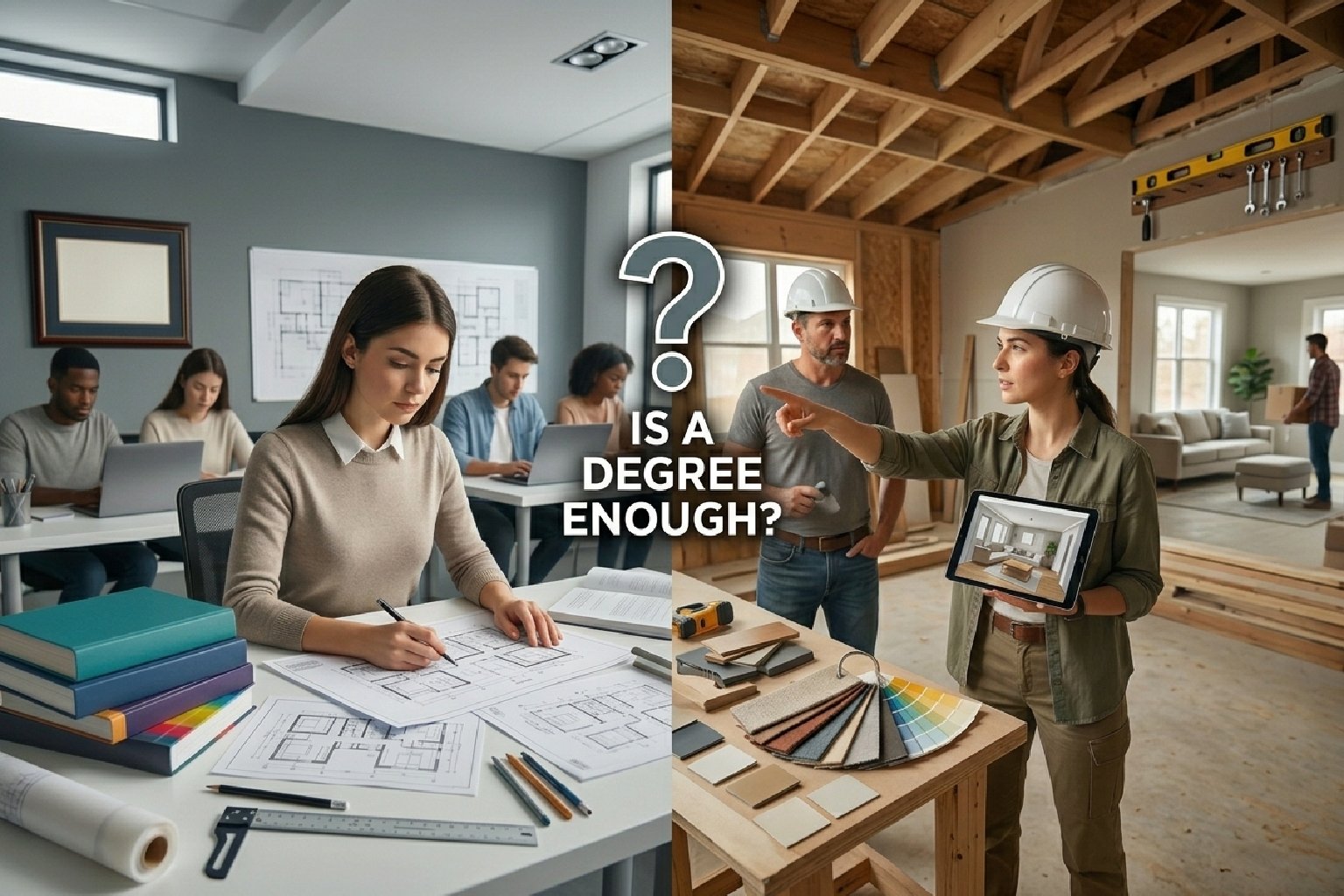
Is a Design Degree Enough to Build a Career in Interior Design?

It’s a lot simpler to observe the outside of interior design than it is to see the inside of it. Choose furniture, colors, and create a beautiful room! But once you are in the profession of interior design, you realise that it’s quite technical and detailed.

Many students think that they need to have an interior design degree to start a career in interior design. But it’s not the case, though.

Interior design is not all about the knowledge of design principles. It involves how they can be used in real life spaces, real life constraints.

A Degree Builds Your Foundation

An interior design course helps you understand how things work in the interior. You are introduced to layout, lighting, materials, and design concepts. Interior design classes involve assisting you in applying your concepts in projects that you work on in the interior.

A wonderful interior design Institute gives you a systematic structure to play around and learn. But now you’re in a controlled environment. Now it’s the real challenges that lie ahead.

Execution Is Where the Real Test Begins

While it may be possible to design the perfect layout on paper, there are real-world limitations, such as budget, space, client requirements, and site conditions.

This is where your interior design portfolio will come in handy. Shows skills in problem-solving. If you can’t execute the designs, then at the best interior design institute, success is nothing.

Site Experience Changes Everything

The biggest difference between students and professionals is experience in the sites.Real project work helps you to prepare for the unexpected. The materials might not perform as intended. Changes to some designs may be necessary. There may be a need to change requirements during the client’s project.

While a degree in Interior Design exposes you to ideas, on-the-job experience teaches you how to deal with complexity.

Problem-Solving Is the Core Skill

Interior design isn’t just a creative way of working. It is problem-solving.

What’s the best way to utilize a small area?

What is your approach to finding a balance between aesthetics and usefulness?

How do you work within limitations?

These are the types of questions you’ll have to answer in a true interior design career. And these skills are acquired through experience and not classes only.

Communication Matters More Than You Think

When it comes to interior design, it isn’t just about you. Develop designs for a client.

Communicate, support, and be in sync with the client’s expectations.

It is a very much required skill in real projects; however, few interior design classes have the opportunity to develop this skill.

So, Is a Degree Enough?

An interior design degree is very important, as it provides you with guidance and knowledge (which you cannot get without learning). However, this isn’t enough.

Below are the skills that are necessary for a successful career in interior design:

  • Practical experience
  • Strong execution skills
  • A full range of interior design projects.
  • Problem-solving ability
  • Communication skills

These are the things that make up your development.

Wrap Up

Interior design isn’t only about learning how to design interior spaces.
It is, in fact, a matter of getting an idea about how those spaces will function in the real world (Not just the images).

An interior design course provides you with a base, but you have to make it grow to live up to it.

You can build a successful interior design career. You get to concentrating on building your experience, skill level, and portfolio.After all, it’s not all about the degree.

It’s all about results, the actual ones.

How NIF Global Prepares Students Like the Best Fashion Schools in the World

Fashion education has gone well beyond the aspect of how to sketch clothes or how to stitch clothes. The most renowned fashion schools of the world pay attention to creativity, industry exposure, design thinking, and business understanding. They train the students to operate in a very competitive worldwide fashion sector. 

NIF Global also practices a similar pattern of learning as it makes sure that students who have joined the fashion design course are trained according to the requirements of the leading fashion institutes in the world. Through the creative and professional knowledge, the institute assists the students in achieving sound backgrounds towards successful careers in fashion.

A Curriculum Designed for the Modern Fashion Industry

The major colleges of fashion designing organize their programs to suit the changing demands of the fashion world. The students are trained not only in the creation of garments, but also in other aspects like fashion trends, textile knowledge, and fashion marketing. 

At NIF Global, the professional fashion design course aims at making students have a feel of the entire process of fashion, as applied to the development of a concept to the final clothes. Students are taught how to choose fabrics, what to make and how to illustrate the fashion and how to style. 

This all inclusive learning system enables students to learn both the artistic and technical knowledge of fashion design.

Encouraging Creativity and Design Thinking

Creativity is one of the attributes that characterize the best fashion designing institute. The fashion industry is one that requires originality and the designers have to generate their own concepts and styles. 

NIF Global supports students to develop their creativity by taking design tasks, sketching, and concept development projects. Students get to know how to translate inspiration into a fashion collection and innovative design ideas. 

The institute also teaches students to be courageous to explore new styles and methods of designing things by concentrating on creative thinking.

Learning the Complete Fashion Design Process

Colleges of fashion design all over the world including India impart knowledge to the learners on all the phases of a fashion design process. These involve research, development of concepts, design of garments, manufacturing and presentation. 

At NIF Global, students undertaking the course in fashion designing are taught how to develop a fashion collection step by step. 

They discuss fashion forecasting, the behavior of fabrics, pattern making, and techniques of making a garment. Knowing the complete process will enable the students to acquire the hands-on knowledge needed to work in fashion houses, design studios, and apparel brands.

Hands-On Training and Practical Projects

The most effective fashion design schools focus on hands-on education. Fashion is an artistic industry that has to be practiced and experimented with. NIF Global also offers project-based learning in which the students handle design tasks and garment development projects. In such projects students are taught:

  • Fashion illustration and design sketching
  • Fabric selection and textile understanding
  • Pattern making and garment construction
  • Styling and fashion presentation
  • Collection development

This practical experience can assist students to turn their design concepts into actual clothes.

Exposure to Global Fashion Trends

Fashion is a dynamic business that is guided by culture, technology, and world trends. The major fashion designing institutes ensure that the students are not left behind in line with changing fashions. Students at NIF Global are exposed to the global trends in fashion, contemporary style, and up-to-date designs. 

Being aware of these trends assists students to come up with garments, which are in tandem with the existing fashion trends and market tastes. This exposure also motivates students to come up with new and pertinent fashion concepts.

Portfolio Development for Fashion Careers

To make a career as a fashion design practitioner, a good portfolio is required. Students at the top fashion design institutes are tutored on how to construct professional portfolios that demonstrate their creativity and design abilities. 

At NIF Global, students develop portfolios consisting of fashion illustrations, garment ideas, fabric work and collections. Such portfolios are significant where students seek internships, fashion houses or self design opportunities. The portfolio allows showing the vision of a designer, creativity, and technical knowledge.

Industry Exposure and Professional Learning

Another key aspect of global fashion education is interaction with fashion professionals. The exposure to the industry enables students to know the way the fashion business functions. NIF Global promotes learning in the form of workshops, working in the industry and professional advice that will expose students to the actual practices in the fashion industry. 

Such experiences assist the students to learn about fashion manufacturing, presentation of design and market demands. This kind of exposure is a way of bridging the gap between the classroom learning and the professional careers in fashion.

Career Opportunities in the Fashion Industry

The fashion industry offers a wide range of career opportunities for trained professionals. After completing a fashion design course after 12th, students can explore roles such as:

  • Fashion Designer
  • Fashion Stylist
  • Textile Designer
  • Fashion Illustrator
  • Fashion Consultant
  • Fashion Entrepreneur

Many graduates also launch their own fashion labels or work with established fashion brands.

Preparing the Next Generation of Fashion Designers

Fashion education needs to have a balance between creativity and professionalism training. The institutions in which global teaching methodology is practiced enable the learners to acquire artistic skills as well as knowledge in the industry. All this is through an integration of creative learning, hands-on training, building of portfolios, and exposure to the current fashion trends, 

NIF Global equips students in a manner that is reflective of the learning model emulated by the best fashion design colleges in the world. To students who aspire to study professional fashion design courses, studying in this kind of environment may give the necessary background to create a successful career in the fashion business.


What is Interior Design? Everything You Need to Know

Have you ever stepped into a room that made you feel at home?

You will see every color, every texture, and every piece of furniture belongs perfectly, and it’s all in that balance. You guessed it right: that is modern interior design magic. It isn’t just the decoration of a room; it is about the creation of experiences, shaping emotions, and changing ordinary space into something useful and attractive.

Interior design is everywhere and anywhere. You can observe it from cozy homes that reflect personality to luxury hotels that leave a lasting impression. It is a combination of culture, history, technology, and modern everyday needs. So, what makes going in and designing a space so functional on the inside and believable? How can designs look beautiful while combining creativity with reality?

Let’s take a close look at the world of interior design to know what makes it an essential part of our lives and the latest interior design trends.

What is Interior Design?

Interior design is the application of science and art in improving the interior of a building. It is to provide healthier and more aesthetically pleasant environments for the occupants of the space. An interior designer creates form, functionality, safety, and aesthetics in spaces through space planning and the selection of materials and finishes. They do this with the integration of lighting, furniture, and accessories. Interior design, therefore, has a strong influence on daily life, as it creates the spaces in which people interact in places they live, work, and relax.

What is the Salary of an Interior Designer in India?

The salary paid to an interior designer in India varies with experience, area of expertise, and location. For entry-level designers, it ranges simply between ₹3 and 5 LPA, whereas a mid-level designer who has a strong portfolio may earn around ₹6-12 LPA. An experienced designer working with luxury projects or in big firms can earn anywhere over ₹15 LPA. Also, freelancers or independent designers can create project/client-based income scaling.

The Best Interior Designers Make It Look Easy

Most designers construct spaces to meet functional necessities while touching on the emotive side, drawing on a range of skills and technical knowledge. Interior design has evolved from the early 20th century into a rapidly expanding profession.

Interior designers are expected to be knowledgeable about:

  • Textiles, materials, color, space planning, sustainability, and more
  • Software applications for 2D & 3D computer-aided design (CAD)
  • Structural requirements, health and safety issues, and building codes

How to Get into Interior Design?

Interior Design involves education, experience, and portfolio development. Let us explore how to get into this:

  • Right Education: A degree and a good interior design course should be obtained from a recognized institute like NIF Global.
  • Perfect Experience: Internships or employment under established designers give practical exposure.
  • Attractive Portfolio: A strong portfolio demonstrates your design work and concepts.
  • Skills Development: Enhance skills in space planning, CAD, sketching, and material familiarity.
  • Networking: Attend events and seminars to stay updated on trends and opportunities.
  • Certification & Licensing: Some locations require licensing or certification for designers.
  • Start with Small Projects: Gain experience by working on home design or freelance projects.

Scope of Interior Design in India

Interior design in India is on the rise as aesthetics, functionality, and comfortable living spaces gain importance. The demand for interior designers increases with urbanization and evolving lifestyles.

What Are The Career Opportunities in Interior Design?

As an interior designer, there are many career choices, including:

  • Furniture Designer
  • Lighting Designer
  • Kitchen Interior Designer
  • House Interior Designer
  • Textile Designer
  • Stylist
  • Production Designer for Movies and Theater

With so many options, interior design offers diverse career opportunities for everyone passionate about designing spaces.

Can A Commerce Or Science Graduate Take Up Interior Designing?

Yes! Interior design is not limited to any specific educational background. Anyone can pursue an interior design course after the 10th and start their journey. Institutes like NIF Global help students achieve their dreams smoothly. It’s never too late to start your career in interior design!


Wants to Learn From Celebrity Mentors Directly?