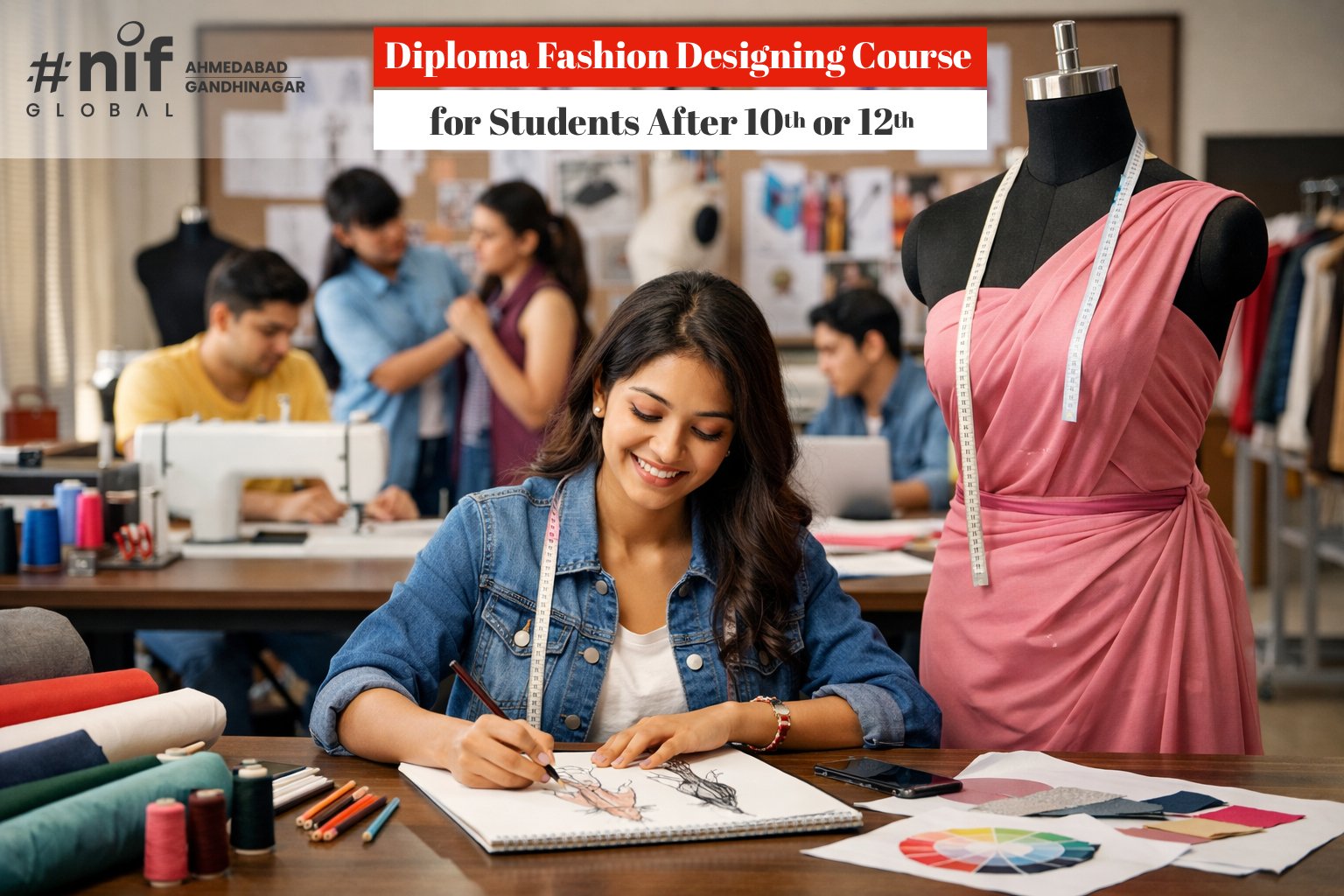
Diploma Fashion Designing Course for Students After 10th or 12th

To most students, the post-10th or 12th stage is not merely about subject selection but is about choosing a path. Creative students are now aware that conventional academic careers are not necessarily the ones that will work, and sometimes are unable to find a systematic means of transforming their passion into a career. It is here that fashion design proves to be a useful and meaningful career decision.

A Diploma in Fashion Designing can enable the student to embark on their creative path sooner, without compromising the discipline, skills, and industry knowledge they will need to establish a long-term career in the fashion field.

Why Fashion Designing Attracts Students After School

Fashion designing is now much more than drawing clothes or keeping up with the times. It is a career that incorporates innovation and technical information, studies, and application. Fashion design is usually, in many ways, in line with the natural interests of students who like working with colours, fabrics, silhouettes, and visual storytelling.

Students are between 10th and 12th, and at this point, exposure is important. A diploma course will enable them to study fashion as a career without having to make the long academic commitments. It assists them in realising whether fashion is their passion, and they are left with useful skills.


What Does a Diploma in Fashion Designing Course Focus On

A diploma course in fashion design schools is designed in such a way that it develops its basics first. The students are slowly exposed to the fundamentals of design; they are made to know how concepts are transferred into the finished products.

They are taught the fundamentals of clothing construction, fabrics, color, pattern making, and other related aspects. In combination with this, the students learn more about modern fashion and the conceptualisation of designer clothes for real persons and real markets. This strategy would make sure that practicality supports the aspect of creativity. Learning at NIF Global makes students think in a critical way: why a specific piece of fabric is suitable for a design, why fit is important to comfort, and how minor details may affect the overall attractiveness of a piece of clothing.


Understanding Designer Clothes Beyond Visual Appeal

Designer clothes are not always about the looks; this is one of the greatest lessons that students learn throughout the diploma course. They are on the side of balance, between creativity and wearability, aesthetics and functionality.

Students start to realise the planning of silhouettes, the use of cuts to improve body movement, and the choice of fabric that has an influence on the final result. This allows them to quit imitating and think originally. They do not copy designs but learn to create their own creative ones.


Digital Exposure and the Role of Online Platforms

The fashion industry is highly digital in the modern world. Designers have to present their work through the Internet, create portfolios, and learn how fashion can be brought to the audience outside of the physical stores.

The concept of digital presentation and clothing design websites is introduced to the students during the diploma course. They get to know how designers show collections on the Internet, how aesthetic branding occurs, and how the digital world has an impact on the trends in fashion. The exposure helps the students to a global fashion world where internet presence has a major role to play.


Why a Diploma Is a Smart Starting Point

A diploma course in fashion design is a good first step to take since it is not pressuring. Students will also be able to dig into the field without settling on an option.

Most students decide to pursue further fashion design programs upon finishing their diploma, and some join entry-level positions. The diploma also makes them familiar with what the industry expects of them at a tender age and helps them gain confidence in making even bigger career choices.

A diploma course gives comfort to parents, too. It provides talent-driven learning, hands-on, and orderly learning environments that helps career development.

Career Pathways After a Diploma in Fashion Designing

Having done a diploma in fashion designing presents a variety of opportunities. Students can continue their studies, work at design studios or boutiques or do production/styling with designers.

The course assists students in acquiring professional behaviors that include meeting deadlines, comprehending work processes, and working together. As time passes by, this base leads to the development of specialised jobs or autonomous and creative projects.


Why Choose NIF Global

NIF global emphasizes on the realization of an educational atmosphere in which creativity is cultivated alongside discipline. The diploma fashion designing course is geared towards assisting the student to develop sound fundamentals, to be familiar with the processes in the industry, and to gain confidence in their abilities.

NIF Global facilitates the student in the move between interest and career by providing a curriculum that is both industry relevant with practical exposure and guided learning.

Conclusion

Fashion design is no longer a poor or unconventional career decision. It is a profession that is well organised and requires skill, creativity, and consistency. A diploma course in fashion design classes enables students to get into this field at the right time, develop a great base and proceed with confidence after 10th or 12th.

A Diploma in Fashion Designing Course in NIF Global may be the initial step towards a meaningful career in fashion for students who are creative, curious, and ready to learn by doing. Stop your search for fashion design schools near me, and join NIF Global today.


What is Interior Design? Everything You Need to Know

Have you ever stepped into a room that made you feel at home?

You will see every color, every texture, and every piece of furniture belongs perfectly, and it’s all in that balance. You guessed it right: that is modern interior design magic. It isn’t just the decoration of a room; it is about the creation of experiences, shaping emotions, and changing ordinary space into something useful and attractive.

Interior design is everywhere and anywhere. You can observe it from cozy homes that reflect personality to luxury hotels that leave a lasting impression. It is a combination of culture, history, technology, and modern everyday needs. So, what makes going in and designing a space so functional on the inside and believable? How can designs look beautiful while combining creativity with reality?

Let’s take a close look at the world of interior design to know what makes it an essential part of our lives and the latest interior design trends.

What is Interior Design?

Interior design is the application of science and art in improving the interior of a building. It is to provide healthier and more aesthetically pleasant environments for the occupants of the space. An interior designer creates form, functionality, safety, and aesthetics in spaces through space planning and the selection of materials and finishes. They do this with the integration of lighting, furniture, and accessories. Interior design, therefore, has a strong influence on daily life, as it creates the spaces in which people interact in places they live, work, and relax.

What is the Salary of an Interior Designer in India?

The salary paid to an interior designer in India varies with experience, area of expertise, and location. For entry-level designers, it ranges simply between ₹3 and 5 LPA, whereas a mid-level designer who has a strong portfolio may earn around ₹6-12 LPA. An experienced designer working with luxury projects or in big firms can earn anywhere over ₹15 LPA. Also, freelancers or independent designers can create project/client-based income scaling.

The Best Interior Designers Make It Look Easy

Most designers construct spaces to meet functional necessities while touching on the emotive side, drawing on a range of skills and technical knowledge. Interior design has evolved from the early 20th century into a rapidly expanding profession.

Interior designers are expected to be knowledgeable about:

  • Textiles, materials, color, space planning, sustainability, and more
  • Software applications for 2D & 3D computer-aided design (CAD)
  • Structural requirements, health and safety issues, and building codes

How to Get into Interior Design?

Interior Design involves education, experience, and portfolio development. Let us explore how to get into this:

  • Right Education: A degree and a good interior design course should be obtained from a recognized institute like NIF Global.
  • Perfect Experience: Internships or employment under established designers give practical exposure.
  • Attractive Portfolio: A strong portfolio demonstrates your design work and concepts.
  • Skills Development: Enhance skills in space planning, CAD, sketching, and material familiarity.
  • Networking: Attend events and seminars to stay updated on trends and opportunities.
  • Certification & Licensing: Some locations require licensing or certification for designers.
  • Start with Small Projects: Gain experience by working on home design or freelance projects.

Scope of Interior Design in India

Interior design in India is on the rise as aesthetics, functionality, and comfortable living spaces gain importance. The demand for interior designers increases with urbanization and evolving lifestyles.

What Are The Career Opportunities in Interior Design?

As an interior designer, there are many career choices, including:

  • Furniture Designer
  • Lighting Designer
  • Kitchen Interior Designer
  • House Interior Designer
  • Textile Designer
  • Stylist
  • Production Designer for Movies and Theater

With so many options, interior design offers diverse career opportunities for everyone passionate about designing spaces.

Can A Commerce Or Science Graduate Take Up Interior Designing?

Yes! Interior design is not limited to any specific educational background. Anyone can pursue an interior design course after the 10th and start their journey. Institutes like NIF Global help students achieve their dreams smoothly. It’s never too late to start your career in interior design!


What is Fashion Design? A Complete Guide to the Art, Trends, and Techniques of Style

Fashion is a glorious world shaped by innovation, creativity, and different cultures. From great designers who flaunt their styles at international fashion events to emerging talents trying to push the limits, the fashion scene is completely different. Designers get influenced to create unique and diverse fashion with a mix of everything – bustling cities and relaxed coastal vibes.

What is Fashion Designing? A Modern Take on a Timeless Art

Fashion design is the creative process of designing garments, accessories, and footwear that are aesthetic and also functional. Fashion design involves not only sketching pretty clothes but also understanding fabrics, colors, patterns, and the latest trends in fashion. A fashion designer brings life to a concept by choosing fabrics, cutting and stitching them, and ensuring the final output creates a great look and fit.

In today’s modern times, fashion design has grown beyond just aesthetics and includes sustainability, technology, and cultural influences. Designers need to consider eco-materials, digital fashion, and international fashion trends while creating collections. Every outfit, be it high-end couture or streetwear, tells a story and embodies a combination of creativity, craftsmanship, and demand.

History of Fashion Design

Fashion design has moved from being a royal, noble art to one that shapes everyday style. It began in ancient times when clothing represented status, with Egyptian pharaohs wearing gold-embroidered linen while Roman senators draped themselves in togas. Very few could afford the silks and velvets in the Middle Ages in Europe. The real change came in the 19th century when Charles Frederick Worth, regarded as the first fashion designer in the modern sense, designed clothes rather than sewing them for other people. Thereafter followed haute couture, ready to wear, and then fast fashion- so the trend trickled down to everyone. Nowadays, fashion means just the right mix of creativity and technology, which go hand in hand with other relevant aspects such as sustainability and culture; hence, one finds constant change.

What is a Fashion Designing Course?

If you are confused, what is the job of a fashion designer? How to become a fashion designer? A professional course in fashion design is the first step on the path to turning creative aspirations into a successful career in the fashion industry. It offers many skills such as fashion design drawing, pattern-making, garment construction, and forecasting trends. If your ambitions lie in creating fashionable garments, designing accessories, or launching your own fashion brand, a structured course provides you with the fundamental skills and knowledge.

NIF Global follows an industry-oriented approach by offering courses such as BSc Fashion Designing and Bachelor of Fashion Design in keeping with the latest trends and techniques. The curriculum follows the new techniques of fashion design-drawing and fabric selection, draping, digital design tools, and business strategies that prepare students for the real world.

What One Learns in a Fashion Designing Course?

  • Sketch & Illustration: Learn fashion illustration and how to create detailed fashion design sketches.
  • Textile Science & Fabric: Studying the different fabrics and materials.
  • Garment Construction and Draping: Making of stylish yet functional outfits.
  • Fashion History & Trends: Complete knowledge about fashion’s evolution and its cultural impacts.
  • Digital Fashion: The usage of technology in virtual design and styling.
  • Business and Marketing: How to brand, market, and sell designs.

Career Opportunities for Fashion Designers

A fashion designer can work in various fields, from luxury fashion houses to film and television costume design. Many also enter entrepreneurship, launching their own labels or working with global brands. Some even explore digital fashion.

How to Become a Fashion Designer?

  • Join a prestigious fashion design institute like NIF Global.
  • Learn the basics of fashion design drawing, sketching, and garment construction.
  • Create a very strong portfolio displaying your designs.
  • Get hands-on experience through internships and fashion events.
  • Keep updated on trends followed by Indian fashion designers.

Wrapping Up

Fashion design is not just about making beautiful clothes; it is everything that forms identity, culture, and innovation. If given proper mentorship and education, you would be able to bring to life every creative vision and also, with effort and luck, you can be a known name in the international fashion industry.

How to start a career in fashion design?

Fashion is not mere clothing; it’s an industry, the one that keeps changing and gets involved into creativity, technology, and business. With digital fashion, sustainable materials, and AI-based personalization, the industry is facing massive changes. We can see so many global trends that have been set by designers like Sabyasachi and Manish Malhotra. Nowadays fashion consumers are influenced by social media influencers and online fashion marketplaces. All you need is an understanding of the industry, the right skill sets, awareness of trends and also career options after fashion designing, so you may finally realize your dream of owning a label or becoming a top stylist. For scope of fashion designing, you know, there is not limit.


Who is a Fashion Designer?

Fashion designers are creative and technical individuals who design and create latest and trendy clothing, fashion ranges and accessories. There are many different types of fashion designers, and they typically work in three main or broad areas: high-street fashion, haute couture and ready-to-wear. They also specialize in other types of garments such as menswear, womenswear, sportswear, accessories, and footwear. What a fashion designer would do will solely depend on the kind of fashion he/she is into and the place of employment. Also if you search on how many years to become a fashion designer, there are different long and short term courses, you have to decide your preference.

Fashion designing training

How to start your career in fashion designing?

To start this, you must be aware of a few steps. These steps also answer your main question, which is how to become a fashion designer after 12th. Let’s have a look on them as under:


  1. Understand the Industry & Career Opportunities in Fashion Designing

The fashion industry is broad and ever-evolving, covering all types of apparel, accessories, footwear, textiles, and luxury designs. The trends that tops brands bring which make them become front-runners in apparel should also be considered. How interest in digital fashion is also gaining momentum, with designers using AI in trend forecasting. You can consider to get different career options in fashion designing like you can work as fashion stylist, textile designer, fashion designer and many more options are there. Fashion designer scope is endless.


  1. Develop Your Creative & Technical Skills

Fashion design is not just applicable to creativity but also the technical attributes. One is expected to master sketching, pattern-making, and draping. Besides, software like Adobe Illustrator, CLO 3D, and CAD has become a part of the designer’s toolbox for digitally representing everything. For example, Nike implements a 3D design that reduces the fabric waste leveraging the technical skills in sustainable fashion. The recent trends such as digital fashion and AI-generated designs make it necessary to acquire these tools with diligence. 


  1. Get the Right Education & Training

An excellent fashion designing course creates a solid foundation for the fashion career ahead. There are different types of fashion designing course. While holding bachelor’s degree in fashion designing or Master degree in fashion design from reputed institutes provides in-depth knowledge, short-term courses also have many skills that can be developed. When choosing your certificate course in fashion designing or best fashion designing colleges in india, experienced faculty and mentors from the industry should also be considered. One should get hands-on practical knowledge with real-world internships as much as possible. If you have active participation with established brands, exposure to the industry can be achieved. 


  1. Gain Practical Experience & Build a Strong Portfolio

Fashion blends talent with practical experiences. Internships with brands such as Manish Malhotra or Fendi give a feel of the working environment. Walking the ramp, participating in college exhibitions, and online styling competitions give one’s talent visibility. Many successful designers like Masaba Gupta have started with small projects before launching into the big way. For any designer who wishes to be taken seriously by employers or potential clients, an organized portfolio is essential. Real-world experience makes you ready for the industry and thrives on distinguishing you from the competition.


  1. Build Industry Connections

Networking gives an opportunity to widen the horizon of job opportunities and collaboration. By attending events such as Lakmé Fashion Week, Dubai Fashion Week or Paris Fashion Week, one gets exposure to global trends and prominent personalities. To smoothen the networking process, one could join fashion groups on LinkedIn, connect with designers on Instagram, and take workshops to build relations. Many designers learn by working with others, Manish Arora worked with Rohit Bal before starting his own line. Right people and mentors are the key to breaking into the industry.


  1. Start Your Career: Jobs, Freelancing, or Entrepreneurship

People start searching for fashion designing courses after 12th as fashion offers several careers: working as a designer, assistant, or merchandiser for established brands like Zara or Chanel. Alternatively, freelance work in styling, illustration, or custom garment creation could be advantageous. Platforms like Instagram enable designers to sell their unique creations worldwide. Designers get good responses even after diploma courses in fashion designing. Young entrepreneurs have successfully established brands taking fashion designing course after 10th. A robust online presence and personal branding through social media can certainly open doors for opportunities. 


  1. Know How much does a Fashion Designer Earn 

Fashion designer salary varies with years of experience, skills, and the particular fashion brand or company to which one belongs. When starting out, a fashion designer salary per month in India ranges from ₹25,000 to ₹50,000, while after having gained experience, he or she is able to earn anything between ₹1 lakh and above working with leading brands. The fashion designer salary in India is also determined by if one works in a fashion house, freelances, or runs his or her own label since those specializing in the luxury or international markets earn more. Over time, once they perfect their client base and brand, the salary of a fashion designer per month will go very high, hence making it very lucrative. You should get complete answer on what is the salary of a fashion designer?


  1. Keep Learning & Stay Updated

Fashion evolves rapidly, everyday there is something new, trendy, latest and updated. Hence continuous learning becomes necessary. We see trends like AI-powered fashion design, digital fashion, and sustainable fashion keep the industry changing. Brands such as Stella McCartney have taken the lead in ethical fashion, creating products from environmental-friendly materials. You need to be updated about all these. Constant learning comes through webinars, podcasts, and fashion documentaries. Updating becomes crucial because this is a changing global market where competition is fast gaining and losing relevance.


Wrapping Up

A fashion design career takes creativity, technical know-how, networking skills, and flexibility. With job prospects in working for a brand, freelancing, or starting your own label, learning about trends and technology is paramount. Aspiring professionals can take themselves far if they keep learning, gain experience, and network with the right people. So if fashion is your field of passion, do take that first step today, choose the best college for fashion designing and learn to turn your dreams into a portrait of reality.

Wants to Learn From Celebrity Mentors Directly?