
 Making your first fashion design portfolio can be confusing. You might have lots of sketches, ideas and creative experiments, but don't know how to put them together in a portfolio to demonstrate your skills. Fortunately, a beginner's portfolio doesn't have to look like that of a pro fashion designer.
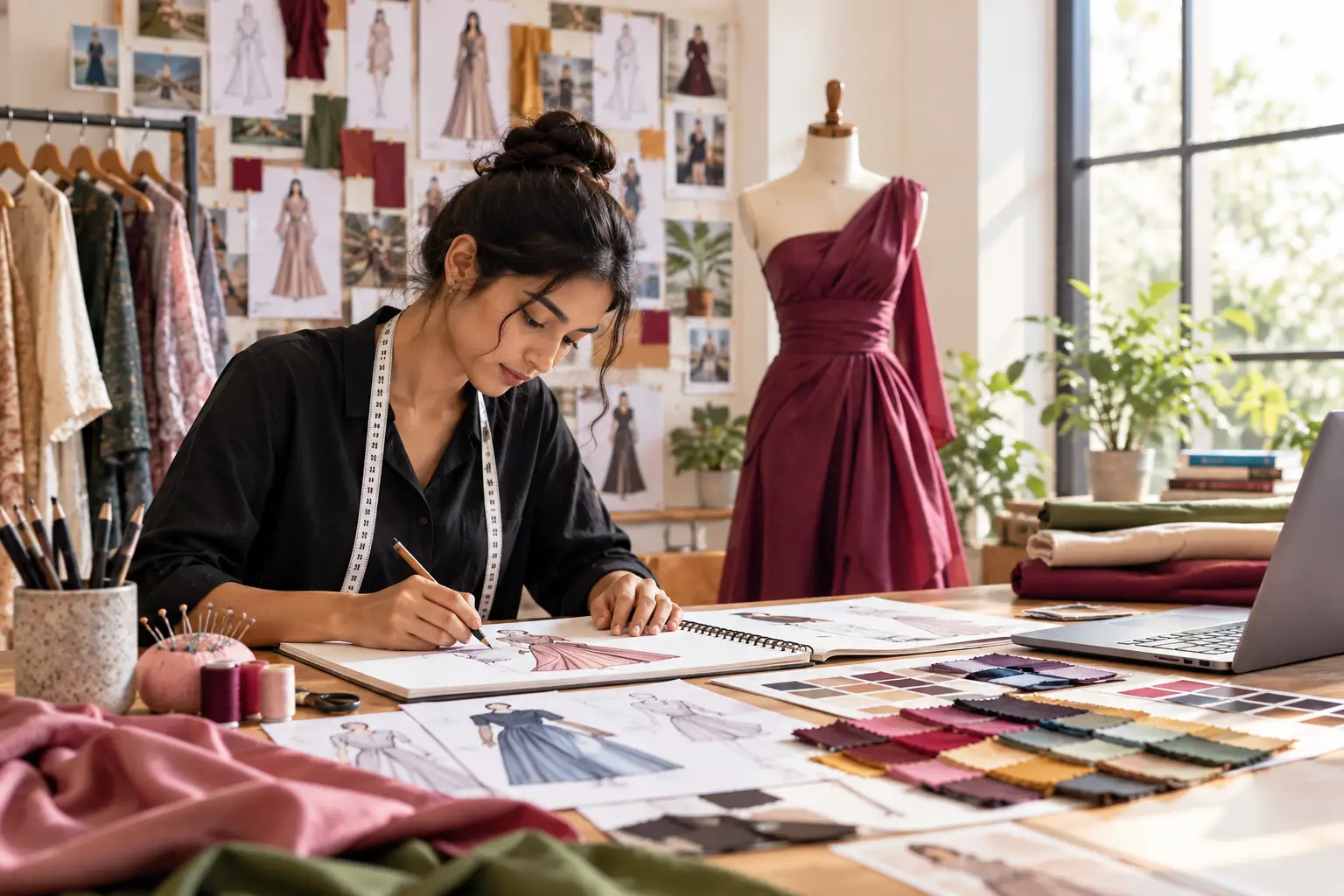
Don't just present finished garments in a fashion design portfolio for beginners, it should demonstrate more than that. It should make the viewer understand your ideas, inspiration, the creative process and how you are able to develop a concept into a design. The following 6 steps will help you to develop a fashion portfolio that is clear and effective, whether you are getting ready for a fashion course, a fashion internship or your first opportunity into the industry.
1. Decide the Purpose of Your Portfolio
Identify the Information Your Portfolio Needs. Before collecting your work, understand why you are creating the portfolio. Students applying to a course in fashion design may emphasize creativity, experimentation, design development, and a fashion portfolio for an internship or job may require a focus on specific technical and professional skills. If applying to a specific programme or institute, consult the submission requirements. Some institutions include a requirement for a number of projects, number of pages, file format or type of work. When you have your purpose in mind, you choose work that enhances your purpose instead of adding all your work.2. Start With Research and a Fashion Mood Board
The first of the best fashion portfolio tips for beginners is to begin with a concept instead of just straight away creating outfits. Select a theme, topic or source of ideas. It may be architecture, natural, traditional textiles, street culture, art, history, or a certain social notion. Investigate your theme and gather visual information. Then, using images, colours, textures, patterns, fabrics and other references related to your idea, make a fashion mood board. It also provides a sense of flow to your portfolio from research to design development.3. Show Your Fashion Design Sketches and Idea Development
While your fashion design sketches should be a significant part of your portfolio, you are not just submitting your sketches of your finished designs. Use some initial ideas and demonstrate how they evolved. Start with rough outlines and simple sketches and then develop certain ideas. Try various proportions, necklines, sleeves, hemlines, shapes and details. Alternatively, you can experiment with various color schemes before making a final decision on the color direction. Many fashion schools and portfolio viewers look at the actual sketching process, rather than an " finished" sketch.4. Add Fabric, Colour and Textile Exploration
Drawing garments is not the only thing in fashion design. Designers must also become familiar with the effect of various fabrics, colors, textures and surface finishes on design. Add fabric swatches and textile experiments, colour palettes, print ideas, embroidery references or surface-development work as applicable. Include short notes to justify the use of specific materials or colours for your concept. If your collection is centered on ocean themes, for instance, you can consider details in your fashion design portfolio like water-inspired textiles,5. Include Technical Drawings and Final Designs
After finalizing your designs, add clear final fashion illustrations and technical drawings, as necessary. In fashion illustrations, the overall appearance, mood and styling of a garment are communicated. Technical (or flats) drawings are a more structured representation of the garment and may include details of seams, pockets, closures, panels and construction.6. Organise and Present Your Fashion Portfolio Clearly
The last step is to put it all together and present it professionally. The ideal portfolios would be well organized so that the viewer can flow and move easily from introduction and research to development and outcomes. A simple structure could be: Introduction then Research then Mood Board after that Sketch Development, Fabric & Colour Exploration, Final Designs, Technical Drawings and last Finished Garments Final Thoughts When you think of a fashion design portfolio as a “story” rather than a collection of drawings, learning how to create one is much easier. Your portfolio should demonstrate where the idea came from, how you researched it, how you experimented with it and how you developed it into a final design.Read Other Posts
October 25, 2026
A Beginner’s Guide on How to Make a Fashion Design Portfolio
Making your first fashion design portfolio can be confusing. You might have lots of sketches, ideas and creative experiments, but...

October 20, 2026
Explore a Complete Range of Courses in Fashion Design at NIF Global
Students do not have to learn how to draw a dress or choose between fabrics – fashion education has broadened....
October 15, 2026
What Turns Fabric and Ideas into Fashion? Discover a Diploma in Fashion and Design
Fashion starts with an idea, but an idea doesn’t make a garment. Designers should know about fabric, colour, silhouette, pattern,...